
The House of Lords as Theatre
The Man Who LaughsThe Lords’ ceremonial grandeur becomes a stage on which hereditary status, public legislation, and contempt for the poor are exposed.
increasing Bearing strength in each event
 decreasing
Bearing strength in each eventdecreasingThe Ritual of Admission
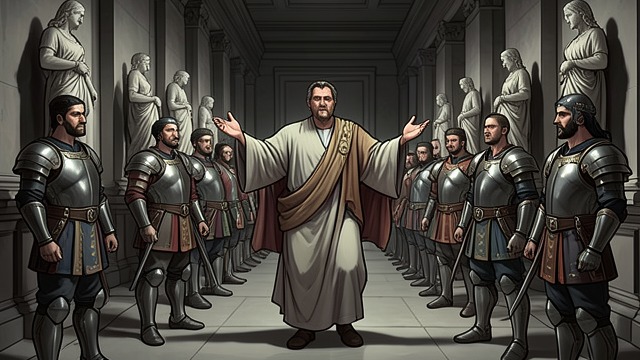
The Ritual of Admission
Rank staged in ceremony
Officials escort Gwynplaine through rooms of heralds and peers.
Robes, swords, seals, and formulas formalize his new position.
The ritual makes social hierarchy visible through dress and movement.
A person remade
Gwynplaine receives the symbols of a peerage he never sought as a child.
The House welcomes him through official forms before knowing his face.
Ceremony grants identity without ensuring acceptance.
The Royal Sitting
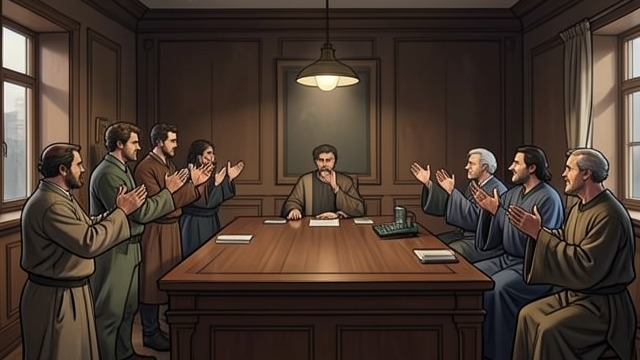
The Royal Sitting
Commons at the bar
The House of Commons stands uncovered before the seated Lords.
Royal commissioners sanction bills on taxation, church income, and public spending.
The ceremony makes political inequality part of the room’s design.
Public burdens approved
The bills charge ordinary people while supporting institutions and privilege.
The Commons’ formal submission contrasts with the Lords’ authority.
Parliamentary procedure becomes a visible enactment of class power.
A New Peer Observed
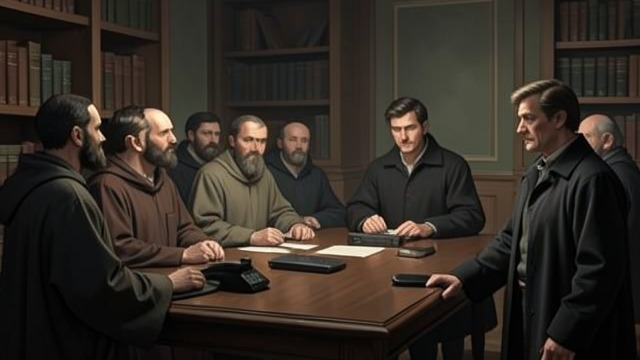
A New Peer Observed
Rumour crosses the benches
Late-arriving lords bring news of the Laughing Man’s identity.
Some peers question the legitimacy and manner of Gwynplaine’s admission.
His face remains obscured while gossip gathers around his title.
Privilege protects itself
The Lords discuss procedure and rank before confronting the new peer.
Their curiosity concerns scandal as much as justice.
The institution treats a human history as aristocratic entertainment.
The Vote and the Face
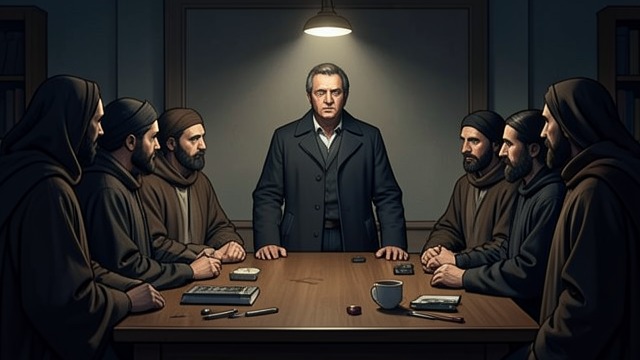
The Vote and the Face
A policy question
The House debates a large addition to the royal consort’s annual income.
Each baron is called to state a formal vote.
The procedure gives Gwynplaine a chance to oppose the subsidy.
Visibility becomes danger
He rises and answers non-content.
The light reveals the face the Chancellor had kept concealed.
The peers respond to the spectacle before weighing his vote.
The Chamber Laughs
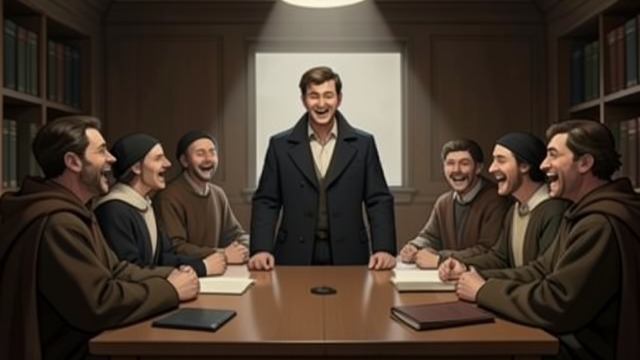
The Chamber Laughs
A political plea derailed
Gwynplaine speaks about hunger, sickness, and the people’s burdens.
His arguments challenge the lords’ distance from everyday life.
The speech briefly gives the poor a representative voice.
Theatre replaces debate
The peers laugh at the speaker’s face and jeer at his words.
The chamber’s ceremonial solemnity dissolves into spectacle.
The institution demonstrates how rank can silence truth without answering it.
Before the evening sitting of 1705
At the start of the Lords’ evening session
After the Commons leave the chamber
During the Lords’ vote on Prince George’s allowance
Immediately after Gwynplaine begins his speech
